

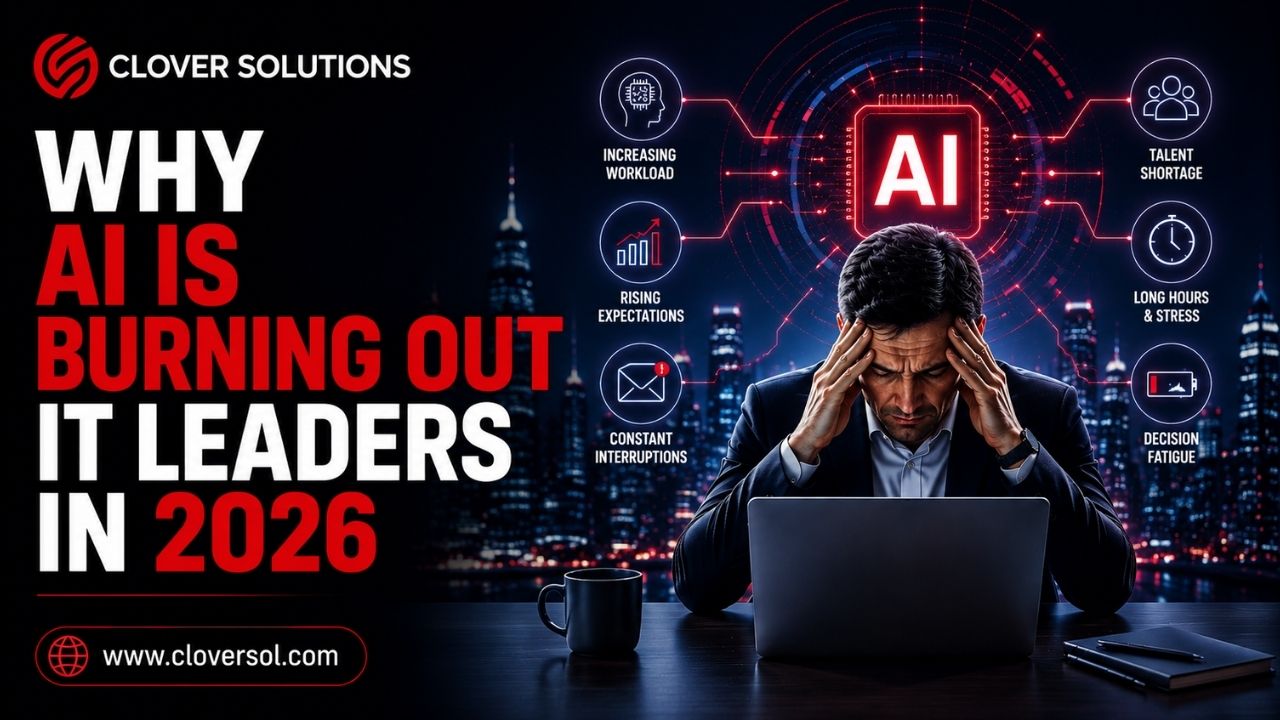
Why AI Is Burning Out IT Leaders in 2026: The Hidden Cost of Rapid AI Adoption
Artificial Intelligence has become a business priority across industries. From automation and predictive analytics to generative AI and intelligent workflows, organizations are investing heavily in AI to gain a competitive advantage.
However, behind the excitement lies a growing challenge that many businesses are overlooking: AI burnout among IT leaders.
CIOs, CTOs, IT Directors, and technology managers are under immense pressure to deliver AI initiatives quickly while balancing security, compliance, infrastructure modernization, talent shortages, and business expectations.
As AI adoption accelerates in 2026, many technology leaders are finding themselves overwhelmed by increasing workloads and unrealistic expectations.
Why IT Leaders Are Feeling the Pressure
AI implementation is not simply about purchasing software or deploying a chatbot.
Successful AI adoption requires:
- Strategic planning
- Infrastructure upgrades
- Data management
- Security controls
- Employee training
- Change management
- Continuous monitoring
Many IT leaders are responsible for managing all these areas simultaneously.
The result is growing stress and decision fatigue.
The AI Talent Shortage Is Making Things Worse
One of the biggest reasons AI is burning out IT leaders is the ongoing shortage of skilled AI professionals.
Organizations are struggling to hire:
- AI Engineers
- Machine Learning Specialists
- Prompt Engineers
- Data Scientists
- AI Solution Integrators
- Automation Engineers
Without the right talent, IT leaders often absorb additional responsibilities themselves while trying to meet aggressive project deadlines.
Constant Pressure to Deliver AI Results
Business executives see AI as a growth driver and expect immediate results.
However, AI projects often require:
- Data preparation
- Model training
- System integration
- Employee adoption
- Ongoing optimization
Many organizations underestimate the complexity involved.
IT leaders are frequently caught between executive expectations and operational realities.
Cybersecurity Risks Continue to Grow
AI introduces new security concerns.
Organizations must protect:
- Sensitive business data
- Customer information
- AI models
- Intellectual property
As AI usage increases, cyber threats are evolving as well.
Technology leaders are responsible for maintaining security while continuing innovation efforts.
This balancing act significantly contributes to burnout.
Managing Hybrid AI-Human Teams
Many organizations are adopting hybrid workforce models where AI and human employees work together.
While this improves productivity, it also creates new management challenges:
- Workforce planning
- AI governance
- Process redesign
- Employee training
- Performance measurement
IT leaders must develop entirely new management strategies while ensuring business continuity.
AI Governance and Compliance Challenges
Governments and regulatory bodies are increasing oversight of AI technologies.
Organizations must address:
- Data privacy
- AI transparency
- Ethical AI usage
- Regulatory compliance
Technology leaders are expected to create governance frameworks that protect organizations while enabling innovation.
This responsibility adds another layer of complexity.
The Cost of AI Burnout
When IT leaders experience burnout, organizations often face:
Reduced Innovation
Exhausted leaders are less likely to explore new opportunities and strategic initiatives.
Delayed Projects
Burnout can slow decision-making and implementation efforts.
Increased Employee Turnover
Leadership burnout often impacts team morale and retention.
Higher Operational Risks
Stress can contribute to oversight failures and security vulnerabilities.
How Organizations Can Reduce AI Burnout
Build Strong Technology Teams
Organizations should invest in skilled professionals who can support AI initiatives.
Partner with Specialized Staffing Firms
Working with experienced technology staffing providers can reduce hiring pressure and accelerate project delivery.
At Clover Solutions, we help organizations connect with highly skilled professionals across:
- Artificial Intelligence
- Cloud Computing
- Cybersecurity
- DevOps
- Data Analytics
- Software Engineering
Set Realistic Expectations
AI transformation is a journey, not an overnight success.
Business leaders should align expectations with implementation timelines.
Invest in Continuous Learning
Providing AI training and development opportunities helps teams adapt to evolving technologies.
Establish Clear Governance Frameworks
Strong governance reduces uncertainty and helps leaders manage AI initiatives more effectively.
The Future of AI Leadership
As AI continues to evolve, the role of IT leaders will become increasingly strategic.
Future technology leaders will need expertise in:
- AI strategy
- Workforce transformation
- Risk management
- Cybersecurity
- Data governance
- Business innovation
Organizations that support their leaders with the right talent, tools, and resources will be better positioned for long-term success.
Conclusion
Artificial Intelligence is creating tremendous opportunities for businesses, but it is also placing unprecedented demands on technology leaders.
The combination of talent shortages, security concerns, compliance requirements, and pressure to deliver results is contributing to rising burnout levels across the IT industry.
Organizations that recognize these challenges and invest in people, processes, and strategic staffing solutions will be better equipped to navigate the future of AI successfully.


